

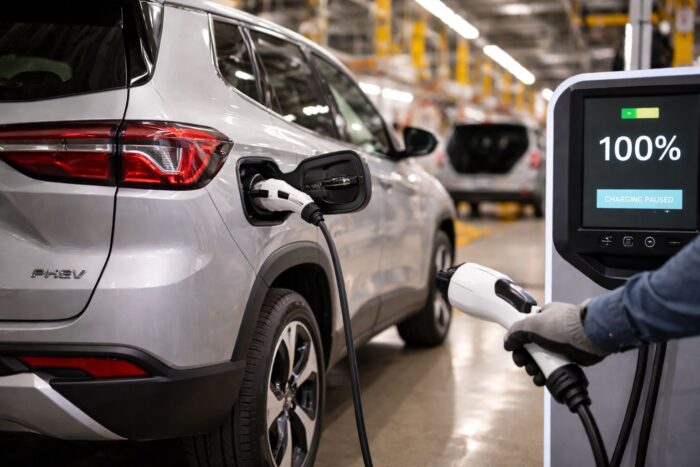
The automotive industry’s transition to electric vehicles just hit another speed bump. Stellantis, the multinational corporation behind household names like Jeep and Chrysler, has abruptly halted sales of its plug-in hybrid electric vehicles (PHEVs) in the United States, signaling a major strategic pivot amid weakening consumer demand and mounting regulatory pressures [1].
The decision affects some of the company’s most recognizable nameplates, including the Jeep Wrangler 4xe and Grand Cherokee 4xe, along with the Chrysler Pacifica Hybrid minivan. For an automaker that had positioned itself as a leader in electrified off-road vehicles, this represents more than just a product line adjustment—it’s a fundamental recalculation of how traditional manufacturers navigate the bumpy road to electrification.
Why Stellantis Is Abandoning Its PHEV Strategy
The automaker’s decision stems from a confluence of market realities that have left plug-in hybrids in an increasingly precarious position. According to company statements, weak consumer demand has been the primary driver behind the discontinuation [3]. Despite initial enthusiasm for vehicles that promised both electric efficiency and gasoline-powered range security, American buyers haven’t embraced PHEVs with the fervor automakers anticipated.
But market dynamics tell only part of the story. Stellantis is simultaneously grappling with a significant recall affecting approximately 33,000 vehicles due to battery fire risks [1]. When safety concerns intersect with sluggish sales, the business case for continuing production becomes increasingly difficult to justify.
The timing of this decision is particularly noteworthy. As the automotive industry faces what many analysts call an “EV slowdown,” manufacturers are reassessing their electrification timelines and strategies. Stellantis appears to be making a calculated bet: rather than investing resources in a middle-ground technology, the company is reportedly redirecting its focus toward fully electric vehicles and traditional internal combustion engine models.
The Vehicles Affected by the Decision
The casualties of this strategic shift represent some of Stellantis’s most ambitious attempts at blending capability with efficiency. The Jeep Wrangler 4xe had earned distinction as America’s best-selling plug-in hybrid, appealing to off-road enthusiasts who wanted to reduce their environmental footprint without sacrificing the legendary Wrangler capability [2]. Its combination of electric-only range for daily commuting and gasoline power for extended adventures seemed like the perfect formula.
The Jeep Grand Cherokee 4xe followed a similar philosophy, offering luxury SUV buyers a premium electrified option that didn’t compromise on space, comfort, or towing capacity. For families seeking a greener three-row SUV without committing to full electrification, the Grand Cherokee 4xe represented an attractive middle path.
Meanwhile, the Chrysler Pacifica Hybrid served a unique niche as the only plug-in hybrid minivan in the American market [2]. For family-focused buyers juggling school runs, grocery trips, and weekend getaways, the Pacifica Hybrid’s electric range could handle most daily driving while eliminating range anxiety entirely.
The discontinuation of these models leaves significant gaps in Stellantis’s electrified lineup and raises questions about the company’s near-term strategy for meeting increasingly stringent emissions regulations.
Understanding the Broader EV Market Context
Stellantis’s retreat from plug-in hybrids doesn’t exist in a vacuum—it reflects broader turbulence in the electric vehicle market. After years of explosive growth projections and aggressive electrification targets, the industry is confronting a more complex reality.
Consumer hesitation remains a persistent challenge. Despite improvements in battery technology, charging infrastructure, and vehicle design, many American buyers remain skeptical about fully electric vehicles. Concerns about range, charging availability, battery longevity, and upfront costs continue to dampen enthusiasm, even as manufacturers pour billions into EV development.
This hesitation has created what some analysts call the “missing middle”—a gap between early adopters who have already purchased EVs and mainstream consumers who remain unconvinced. Plug-in hybrids were supposed to bridge this gap, offering an entry point to electrification without the perceived compromises of full battery-electric vehicles.
Yet PHEVs have struggled to find their audience. They’re often more expensive than traditional hybrids, more complex to manufacture, and require behavior changes from owners who must remember to charge them regularly to realize their efficiency benefits. Studies have shown that many PHEV owners rarely charge their vehicles, essentially driving expensive conventional hybrids [1].
Regulatory Pressures and Compliance Challenges
Beyond market demand, Stellantis faces increasingly stringent regulatory requirements that complicate its product planning. Federal emissions standards continue tightening, while California and states following its lead have implemented aggressive zero-emission vehicle mandates. These regulations don’t care whether manufacturers achieve compliance through PHEVs, full EVs, or improved combustion engines—they simply demand results.
The recall affecting Stellantis’s PHEVs adds another layer of complexity. Battery fire risks represent one of the most serious concerns for electrified vehicles, capable of generating intense regulatory scrutiny and eroding consumer confidence. Addressing such recalls requires significant investment in engineering resources, warranty reserves, and customer communication—costs that become harder to justify when sales volumes disappoint [3].
For Stellantis, the calculation appears straightforward: investing in fixing and marketing vehicles with limited sales potential while managing safety recalls doesn’t make business sense when those resources could accelerate development of next-generation electric vehicles or enhance profitable combustion-engine models.
What This Means for Consumers and Competition
Current owners of Stellantis PHEVs shouldn’t panic. The company will continue supporting these vehicles with parts, service, and warranty coverage. However, the discontinuation does raise questions about long-term parts availability and resale values as these vehicles age.
For prospective buyers who were considering a Stellantis PHEV, options are narrowing. The American plug-in hybrid market is becoming increasingly concentrated among Asian manufacturers, particularly Toyota, Hyundai, and Kia, which continue offering robust PHEV lineups [2]. European luxury brands like BMW and Mercedes-Benz also maintain PHEV variants of their popular models.
This shift potentially advantages competitors who have committed more deeply to plug-in hybrid technology. As Stellantis exits the segment, manufacturers still offering PHEVs may capture buyers who aren’t ready for full electrification but want some electric capability.
Strategic Implications for Stellantis’s Future
The discontinuation forces important questions about Stellantis’s electrification roadmap. Company leadership has indicated that resources previously allocated to PHEVs will support development of fully electric vehicles, suggesting confidence that the EV market will eventually mature beyond its current growing pains [1].
This represents a significant gamble. If consumer adoption of fully electric vehicles continues lagging projections, Stellantis may find itself caught between discontinued PHEVs and EVs that aren’t yet viable for mainstream buyers. Traditional combustion engines can only carry the company so far as emissions regulations tighten and fuel economy standards increase.
Alternatively, if Stellantis successfully develops compelling, affordable EVs that address consumer concerns about range, charging, and cost, the PHEV discontinuation may appear prescient—an efficient reallocation of resources away from transitional technology toward the endgame.
The company’s decision also reflects broader challenges facing traditional automakers. Unlike EV-native companies that can focus exclusively on battery-electric technology, established manufacturers must balance investments across multiple powertrains while managing complex dealer networks, supplier relationships, and consumer expectations built over decades.
Industry-Wide Reckoning
Stellantis’s move may represent the beginning of broader industry consolidation around electrification strategies. As the initial euphoria around EVs gives way to more realistic assessments of consumer readiness and infrastructure development, manufacturers must make difficult choices about where to invest limited resources.
Plug-in hybrids, once heralded as the perfect bridge technology, are increasingly viewed as neither fish nor fowl—too complex and expensive compared to traditional hybrids, yet offering insufficient electric range to satisfy committed EV advocates. Their future may lie primarily with manufacturers competing in markets with strong regulatory incentives for electrification, particularly in Europe and China.
For American consumers, the PHEV segment’s contraction means fewer choices and potentially less competition-driven innovation. Whether this consolidation ultimately benefits or harms buyers depends largely on how quickly fully electric vehicles mature into practical, affordable options for the mainstream market.
The path forward remains uncertain, but Stellantis’s decision underscores a fundamental truth: the transition to electric mobility won’t follow a straight line, and technologies that seemed essential just years ago may prove to be temporary detours on a more complex journey than anyone anticipated.
—
Key Takeaways
- Stellantis has discontinued all plug-in hybrid vehicle sales in the United States, including the Jeep Wrangler 4xe, Grand Cherokee 4xe, and Chrysler Pacifica Hybrid
- The decision is driven by weak consumer demand and complicated by a recall affecting 33,000 vehicles due to battery fire risks
- The move reflects broader challenges in the EV transition as consumer adoption lags manufacturer expectations and projections
- Stellantis plans to redirect resources from PHEVs toward fully electric vehicle development and traditional combustion engines
- The discontinuation leaves Asian and European manufacturers dominating the American PHEV market
- Current owners will continue receiving support, but the long-term implications for resale values and parts availability remain uncertain
—
Citations:
[1] https://www.cnbc.com/2026/01/09/stellantis-scraps-jeep-chrysler-phevs-amid-ev-slowdown-recall.html
[2] https://insideevs.com/news/783840/jeep-wrangler-phev-chrysler-dead/
[3] https://www.streetinsider.com/Reuters/Stellantis+scraps+US+plug-in+hybrid+sales%2C+citing+weak+demand/25830842.html