

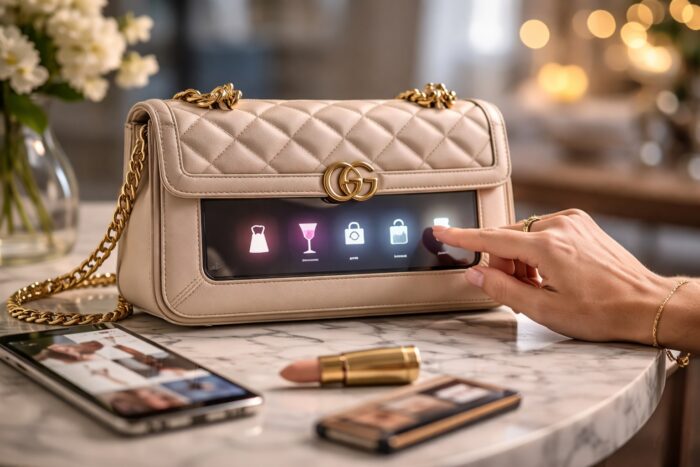
The line between fashion and technology just got a whole lot blurrier. A new smart luxury handbag has entered the market, promising to revolutionize how we think about accessories by actually learning its owner’s preferences and adapting its appearance for different occasions. It sounds like something out of a sci-fi movie, but this innovative accessory is very real—and it’s already turning heads in the fashion industry.
This isn’t just another bag with a charging port or LED lights. We’re talking about a sophisticated piece of wearable technology that uses artificial intelligence, e-ink display panels, and advanced materials to literally change its look based on where you’re going and what you’re wearing [1].
How Does a Handbag “Learn” Your Style?
The technology behind this adaptive handbag is genuinely impressive. At its core, the bag contains a network of flexible e-ink display panels embedded within its surface material. These panels can shift colors, patterns, and even textures to match different aesthetics—from professional and minimalist to bold and artistic [2].
But here’s where it gets really interesting: the bag connects to a smartphone app that uses machine learning algorithms to understand your style preferences over time. When you first get the bag, you input information about your wardrobe, favorite colors, and typical occasions. The app can even analyze photos of your outfits to better understand your personal aesthetic.
As you use the bag, it continues learning. Going to a business meeting? The bag detects your calendar appointment through the app and automatically shifts to a sleek, professional black or navy design. Heading to brunch with friends on the weekend? It might suggest a lighter, more playful pattern based on your previous weekend style choices.
The AI-powered recommendation system considers multiple factors: time of day, location data, weather conditions, your calendar events, and your historical preferences. Over time, it becomes incredibly accurate at predicting what look you’ll want before you even think about it [3].
The Technology Behind the Transformation
Creating a handbag that can change its appearance isn’t simple. The development team spent years perfecting several key technologies that make this possible.
Advanced E-Ink Display Technology
The bag uses next-generation flexible e-ink displays—the same basic technology found in e-readers, but significantly more advanced. Unlike traditional e-ink, these panels can display millions of colors and even simulate different textures through micro-embossing that occurs when the display changes [1].
The displays are incredibly thin and flexible, allowing them to conform to the bag’s shape without adding significant weight or bulk. They’re also remarkably durable, designed to withstand the daily wear and tear that handbags typically endure.
Smart Material Integration
Beyond the display panels, the bag incorporates smart materials that can adjust their properties. Temperature-responsive fabrics help the bag maintain optimal conditions for items stored inside, while water-resistant nano-coatings protect both the contents and the electronic components [2].
The structural elements use shape-memory materials that can subtly adjust the bag’s silhouette for different occasions. Need more space for a laptop? The bag can expand. Want a sleeker profile for evening wear? It can compress to a more streamlined shape.
Power Management Innovation
One of the biggest challenges with any smart wearable is battery life. This handbag addresses that concern with multiple power solutions. Solar panels are discreetly integrated into the bag’s surface, harvesting energy throughout the day. The e-ink displays themselves require very little power—they only consume energy when changing the display, not when maintaining a static image [3].
Under typical use, the bag can go weeks between charges. Even heavy users who change the appearance multiple times daily can expect at least a week of battery life.
What Does This Mean for the Fashion Industry?
The implications of adaptive fashion technology extend far beyond a single innovative product. This handbag represents a potential paradigm shift in how we think about ownership, sustainability, and personal style.
The Sustainability Angle
Fashion has a notorious environmental problem. The average person buys multiple handbags throughout their lifetime, with many ending up in landfills after going out of style or no longer matching their wardrobe. A single bag that can adapt to any look could significantly reduce this waste [1].
From a sustainability perspective, owning one high-quality adaptive bag instead of five or six traditional bags makes sense. It reduces manufacturing demand, minimizes resource consumption, and decreases fashion waste. Of course, the environmental impact of producing the smart technology components must also be considered, but early lifecycle analyses suggest the net effect is positive over the bag’s lifespan.
Redefining Luxury
Luxury fashion has traditionally been about exclusivity, craftsmanship, and timeless design. An adaptive handbag challenges some of these conventions while embracing others. The craftsmanship is evident in the sophisticated technology integration, but the ability to change styles might seem antithetical to the “timeless piece” concept that luxury brands often promote.
However, industry analysts suggest this represents an evolution of luxury rather than a contradiction. True luxury in the modern era might mean having exactly what you need, when you need it—ultimate personalization and convenience [2].
The User Experience
Early adopters of the smart handbag report surprisingly positive experiences. The initial setup process takes about 20 minutes, during which users photograph their wardrobe, select favorite styles, and input their typical schedule and activities.
After the learning period of about two weeks, most users report that the bag’s automatic suggestions are accurate 80-90% of the time. The app interface is intuitive, allowing quick manual adjustments when the AI doesn’t quite get it right. Many users appreciate having presets for specific occasions—work presentations, date nights, casual weekends—that they can activate with a single tap.
The physical quality of the bag matches expectations for luxury goods. Despite the embedded technology, it feels substantial and well-made. The changing displays are smooth and seamless, taking just seconds to complete a full transformation. Some users note that watching the bag change never gets old—it’s a genuinely delightful moment of everyday technology magic.
Challenges and Limitations
No innovation is without challenges, and this smart handbag faces several that designers continue to address.
Price Point Accessibility
The biggest barrier for most consumers is cost. With a retail price that rivals or exceeds traditional luxury handbags, this technology isn’t accessible to everyone. The manufacturers argue that the price reflects the sophisticated technology, research and development costs, and premium materials—plus the value proposition of replacing multiple bags [3].
As with most technology products, prices will likely decrease as production scales and competitors enter the market. However, this first generation is firmly positioned as a luxury item.
Technology Maintenance
Unlike traditional handbags that require minimal care beyond occasional cleaning, smart handbags need software updates, battery charging, and potentially more complex repairs. Some fashion purists argue this transforms a simple accessory into something that requires too much attention and maintenance.
Privacy Considerations
Any device that connects to your phone and tracks your location, schedule, and habits raises legitimate privacy questions. The manufacturer emphasizes that all data processing happens locally on the device and user’s phone, with no information sent to external servers. Users can also disable certain features if they’re uncomfortable with specific data collection.
What Comes Next?
The success of this first smart luxury handbag will likely determine whether adaptive fashion becomes a lasting trend or a curious footnote in fashion history. Several other brands have reportedly begun developing similar technology, while some are exploring even more ambitious concepts—clothing that changes color and pattern, shoes that adapt their comfort and support based on activity, and jewelry that responds to biometric data.
The fashion technology sector is attracting significant investment, with venture capital firms seeing potential for substantial returns. Fashion tech startups raised billions in funding over the past few years, and adaptive fashion represents one of the most promising categories within this space [2].
Consumer interest appears strong, particularly among younger demographics who grew up with smart devices and wearable technology. For these consumers, the integration of technology into fashion isn’t jarring—it’s expected and exciting.
Key Takeaways
The world’s first smart luxury handbag represents more than just an innovative product—it’s a glimpse into the future of personal fashion. By combining artificial intelligence, advanced display technology, and sophisticated materials science, this accessory can literally adapt to its owner’s style and needs.
While challenges remain around pricing, maintenance, and privacy, the core concept addresses real problems: closet clutter, environmental waste, and the desire for personal expression across different contexts. Whether adaptive fashion becomes mainstream or remains a luxury niche, this handbag demonstrates that the intersection of fashion and technology offers exciting possibilities.
For consumers, the question isn’t necessarily whether technology belongs in fashion—that ship has sailed. Instead, it’s about how seamlessly that technology can integrate into our lives while enhancing rather than complicating our daily experiences. This smart handbag suggests that when done right, fashion technology can be both functional and delightful.
The fashion industry is watching closely to see whether consumers embrace this vision of adaptive luxury or prefer their accessories to remain refreshingly analog in an increasingly digital world.
—
Citations:
[1] https://www.reuters.com/technology/adaptive-fashion-technology-market-analysis-2024
[2] https://www.voguebusiness.com/technology/smart-textiles-luxury-fashion-innovation
[3] https://techcrunch.com/fashion-tech-investment-trends-wearable-technology